


PPRA · Workflow, Content & Records

Every process. Every document. Every record. Every decision. One enterprise platform.

Digitize operations with intelligent workflow automation, enterprise content management, and records governance — capturing information at its source, routing work seamlessly, enabling secure collaboration, and preserving every transaction with complete traceability and compliance.

Measured againstISO 15489ISO 27001PDPA 2022
ppra.go.ke

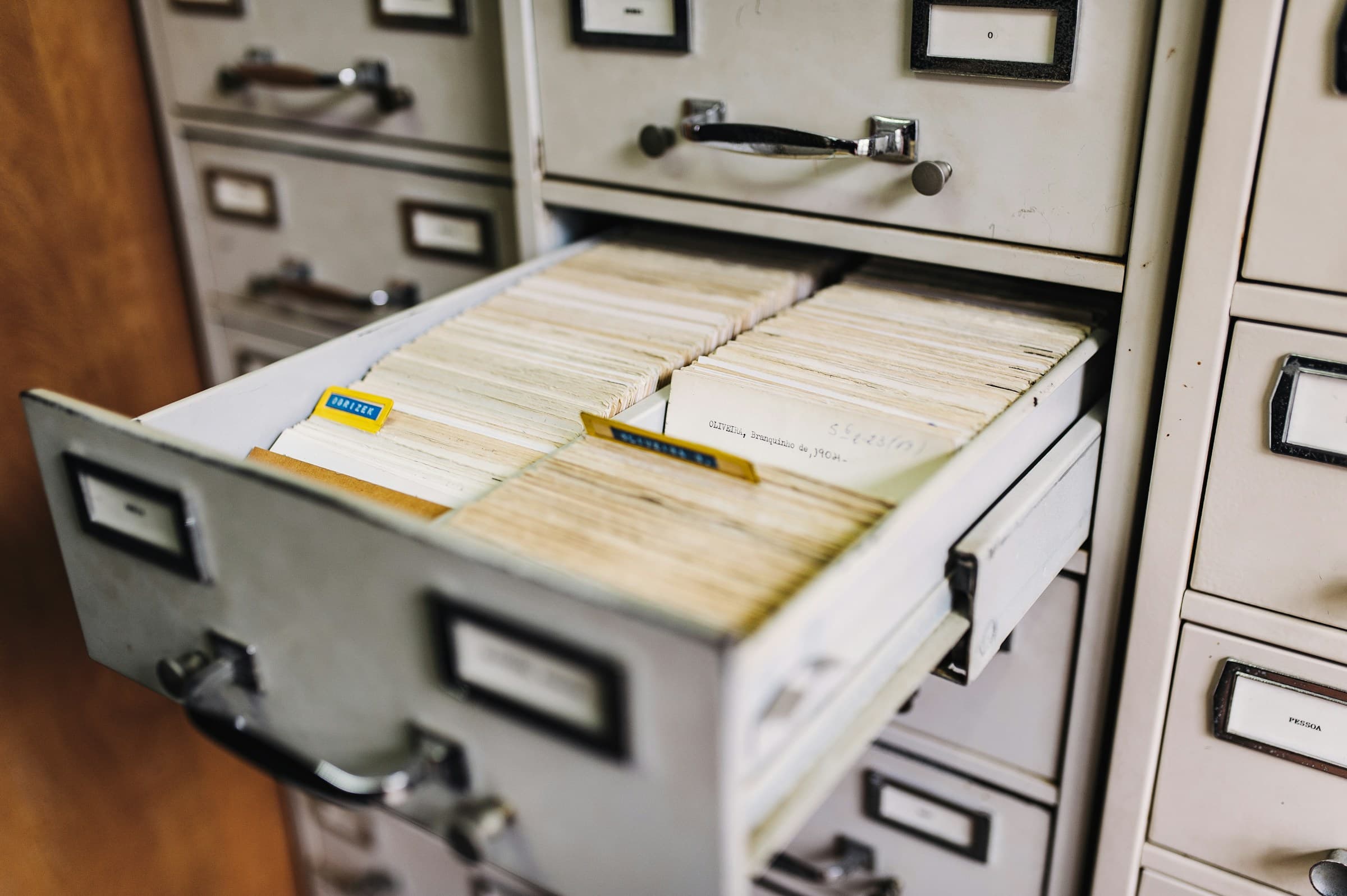
Records registry

File plan · active view

New record
ReferenceTitleClass.Retain
  • PPRA/COR/2026/0417Board resolution — dividend declarationConfidential25 yr
  • PPRA/VOU/2026/1183Payment voucher — custodial fees Q2Internal7 yr
  • PPRA/COR/2026/0416Incoming — regulator correspondenceRestricted10 yr
  • PPRA/MIN/2026/0033AGM minutes — 2025 financial yearConfidentialPermanent
  • PPRA/VOU/2026/1182Petty cash voucher — office suppliesOpen7 yr
Audit chain verified

The Document Management Lifecycle

From the moment a record arrives, to the day it is lawfully destroyed.

An EDRMS is not a shared drive. It is custody: every record accounted for at each stage, with the evidence to prove it.

  1. Capture01

    Capture

    Scan, ingest from email, or bulk-import paper and born-digital records. Scan batches carry legibility, orientation and completeness counts.

  2. Classify02

    Classify

    Every record lands on a file-plan node with its own reference number and a security classification from Open through to Top Secret.

  3. Manage03

    Manage

    Route records through configurable workflows with task pools and SLAs. Version, check out, annotate, and retrieve by metadata or OCR'd full text.

  4. Retain04

    Retain

    Retention schedules attach to file-plan nodes — active years, inactive years, and the disposal action fixed in advance of the record falling due.

  5. Dispose05

    Dispose

    Due records are batched onto disposition certificates for approval. Execution is logged per document, and file bytes are kept for forensic recovery.

Core features of the system.

One secure platform for the whole information lifecycle - from capture and approval to retention and lawful disposal.

Correspondence, memos, contracts and records share one repository, one set of permissions and one workflow engine, so every document is accounted for from the day it arrives.

1 of 5 · Capture

Every record in, the day it arrives.

Scan paper in bulk, take in email and born-digital files, and read their details off the page with OCR.

The portfolio

Every module the organisation runs on, built on the same records core.

See it in action

Three pieces of everyday work, start to finish.

A letter's morning

From the envelope to the officer's desk without a single photocopy.

  1. 8:02

    A letter from the Treasury is scanned at the DG's office. Its sender, date and subject are read off the page.

  2. 8:04

    It is registered and given its reference. The DG's office sends it straight to Procurement; the DG is told where it went.

  3. 9:15

    The registry files it on the right file. Two officers open it, discuss it in the comments, and draft the reply together.

  4. 15:40

    The reply is approved, signed and dispatched by email and by hand - both copies filed against the original letter.


A memo caught in time

Sent for approval, recalled, corrected, approved - all before lunch.

  1. 10:10

    A memo goes to two recommenders and an approver, in that order.

  2. 10:12

    Its author spots a wrong figure. Nobody has acted yet, so she recalls it and the reviewers' queues clear.

  3. 10:20

    Corrected and resubmitted. The recommenders edit in Word with their changes tracked under their names.

  4. 12:05

    Approved and signed. The memo is filed with its full history and circulated to every directorate.

A contract that never lapses

Registered once, watched for its whole life.

  1. Day 1

    A services contract is registered: its number is checked against every other, its owner and implementation team named.

  2. Day 2

    It is validated, and joins the contracts dashboard with its value and expiry.

  3. -180 days

    Six months before expiry the responsible officer is reminded - and again at three months and at one.

  4. Renewal

    The renewal carries its details forward; the old contract and the new stay linked on the same file.

How it is built

Business modules sit on the core services, never beside them.

  1. PresentationExecutive dashboard, User portal, Admin portal, Mobile
  2. Business applicationsCorrespondence, Memo, Contract, Leave, Helpdesk, Special records
  3. Core EDRMS servicesDocument management, Records management, Workflow engine, Search, Notifications
  4. Security and integrationRBAC, ACL, MFA, Audit, APIs, SSO, Encryption
  5. Data and storageRelational database, Document repository, Search index, Backup and archive

Every capability

Ninety-odd capabilities in nine areas - choose one.

Core modules

Every document has one home, one current version and one history - from the moment it is created or scanned to the day it is lawfully destroyed.

Document management

  • Document creation and uploading
  • Centralised document repository
  • Version control
  • Check-in and check-out
  • Preview and download
  • Metadata and document properties
  • Full-text search and indexing
  • Document linking and relationships

Records management

  • Classification and filing plans
  • Registration and numbering
  • Retention schedules
  • Disposal and archival management
  • Transfer and movement tracking
  • Legal holds
  • Records lifecycle management
  • Audit trails and records history

Workflow and process automation

  • Configurable approval workflows
  • Task assignment and delegation
  • Multi-level approvals
  • Parallel and sequential workflows
  • Document review and feedback
  • Escalations and reminders
  • Workflow tracking
  • Electronic approvals and signatures

Capture and digitisation

  • Bulk document scanning
  • OCR (optical character recognition)
  • Automatic metadata extraction
  • Email document capture
  • Barcode and QR code recognition
  • Batch import
  • Document format conversion
  • Capture validation and quality control

Correspondence management

  • Incoming correspondence registration
  • Outgoing correspondence
  • Internal correspondence
  • Reference and serial numbers
  • Assignment and routing
  • Response tracking
  • Confidentiality classification
  • Email integration and notifications

Search and retrieval

  • Global document search
  • Advanced search filters
  • Full-text content search
  • Search by reference number
  • Search by department or document type
  • Saved searches
  • Recent and frequently opened documents
  • Results limited to the searcher's own access

Built in this order

The foundation first, then the modules, then the intelligence.

  1. 1Critical

    Document repository, records classification, metadata, version control, search, access control, audit trails

  2. 2High

    Correspondence, memos, workflow automation, notifications, approvals, OCR, reporting

  3. 3Medium

    Contracts, leave, helpdesk, inventory, store requisitions, integrations

  4. 4Advanced

    AI classification, semantic search, intelligent routing, summaries, predictive analytics

Governance

Anyone can store a file.
Far fewer can prove what happened to it.

Retention, holds and audit are the difference between a document store and a record of account.

Tamper-evident audit trail

Audit rows are hash-chained, so a silently altered or deleted entry breaks the chain. Integrity is verifiable on demand, not merely asserted.

Retention & disposition

Schedules per file-plan node, automatic flagging of records that fall due, and disposal certificates that carry an approver and an execution log.

Legal hold & eDiscovery

A hold blocks every destructive operation on a record. Productions are Bates-stamped page by page and exported for review.

Compliance evidence

Controls mapped to ISO 15489, ISO 27001 and Tanzania's Personal Data Protection Act 2022, with each verdict drawn from the system's own state.

A records registry of bound minute books and annual reports
Board papers, AGM minutes and annual reports carry the longest retention of anything an organisation holds — and are the first records an auditor asks to see.

Security

Held to the standard the records deserve.

Encrypted at rest

Document bytes are sealed with AES-256-GCM, with key rotation supported without re-uploading the corpus.

Identity you already run

Multi-factor sign-in, role-based permissions, and federation through LDAP / Active Directory or SAML single sign-on.

Recoverable

Scheduled database and repository backups with checksum manifests, and a restore path that has been exercised.